
The headline return on this campaign is a number I would never promise again, for reasons that deserve their own post. This is the other half of the story: what we actually built and how it ran, because the mechanics hold up even where the headline return does not repeat.
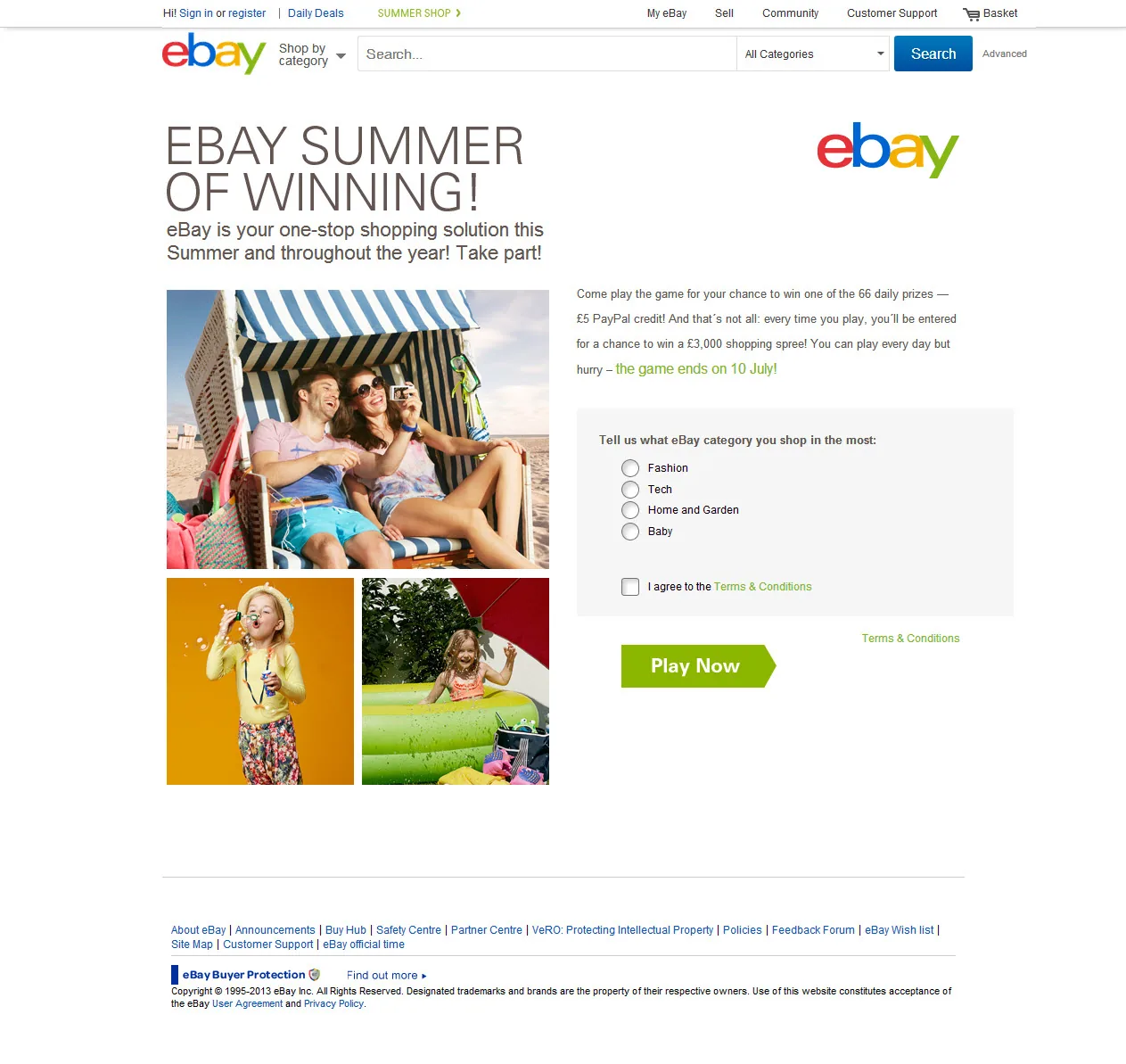
eBay had run a sales gamification microsite in the UK that worked, and asked us to bring the model to Germany. The format was simple and a little ahead of its moment: a standalone game experience tied to live commerce, where playing fed directly into buying. The whole flight lasted two weeks. The paid budget was $75,000, spent almost entirely on Facebook and Twitter. Two weeks and $75,000 deserve a beat of context: this was a test budget by eBay's standards, a rounding error on the German marketing line, which is precisely why we had the freedom to run it aggressively. Nobody hedges a rounding error. The campaign got to behave the way every media plan claims it wants to behave, decisively, because the stakes made decisiveness cheap.
Where the efficiency came from
The targeting stack did the heavy lifting. Custom Audiences built from eBay's own customer data, Lookalike Audiences modeled from the buyers those files described, and Pixel Audiences built from site behavior, layered under conventional demographic and interest targeting. On top of that we segmented delivery by device and operating system, which sounds mundane and was not. This was the era when mobile web checkout was still clumsy, and the device split exposed conversion differences of multiples, not percentages, between segments the standard reporting lumped together. Watching performance split by platform told us in near real time which users converted efficiently at scale, and the budget followed them within the flight, not in the postmortem. That mid-flight reallocation is, in my estimate, worth more of the final number than any single targeting choice; most campaigns discover their best segment in the wrap deck, after the money is gone.
The results, from the campaign reporting: 466,133 visits to the microsite and 330,443 game plays, a 70.9 percent conversion rate from visit to play. That visit-to-play rate is its own lesson before you even reach the commerce numbers: the game asked almost nothing of the visitor, and seven in ten did it. Low-friction first actions build the audience the profitable second action gets sold to. The commerce side is the part people quote back to me: 864,761 transactions attributed directly to the media, and $25.7 million in sales against that $75,000 budget, verified with a randomized holdout so that the number counts only revenue the campaign actually caused, which is the detail that separates this figure from most legendary case study math.
What transfers and what does not
Two things made those numbers possible, and neither was genius. The product was eBay's entire live marketplace, so every player had millions of things to buy the moment the game nudged them; there was no inventory constraint, no shipping objection, no single product's appeal capping the outcome. And the audience data was first party at a depth most brands still do not have, in an era when the platforms could still match it at rates nobody sees today. When people ask me to replicate this campaign, that is the honest answer: bring me a marketplace and a customer file like that one, and we can talk.
What transfers to everyone else is the discipline, and it transfers completely. Build to the transaction, not to the engagement metric the microsite made tempting. Segment until the efficient users reveal themselves, because they are always there and the default reporting always hides them. And move the money mid-flight, which requires negotiating that permission before launch, since no approval process on earth turns around a reallocation inside a two-week window. The 342 does not replicate. The operating model that produced it works at any budget, every time, and it is the part of this case study nobody asks about.
Related industry: Media & Tech.