
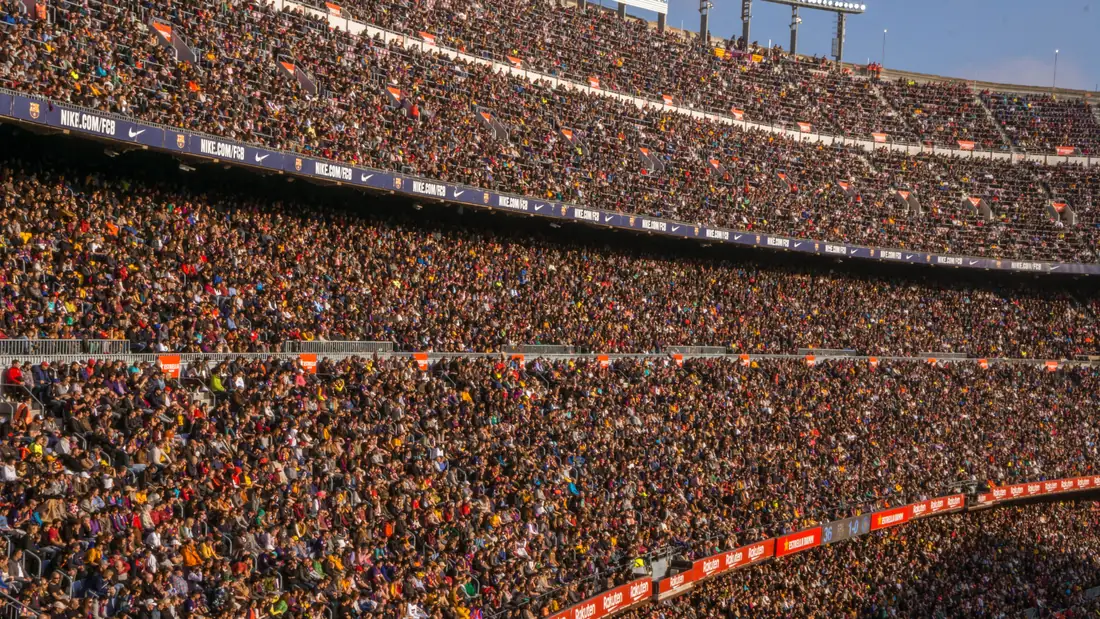
A media buyer sent me a screenshot last week of a completion rate that made the whole campaign look like a triumph. Ninety-four percent video completion, a huge total audience, a placement that felt like a packed stadium. I asked one question back: how much of that audience could have bought anything you sell. The buyer didn't know. That's the actual problem, and it's more common than most reach-obsessed media plans want to admit.
Reach and relevance get treated as the same goal because they both produce big numbers, and big numbers are easy to defend in a budget meeting. But a placement in front of ten million people who are broadly in your category is not the same asset as a placement in front of two hundred thousand people who are actually in-market, and buying decisions based on the first number while reporting the second are how a lot of media budgets end up funding attention rather than outcomes. Run the arithmetic once and the two placements stop being comparable at all: if two percent of the ten million could ever buy and forty percent of the two hundred thousand are actively shopping, the small placement contains nearly half as many real prospects as the giant one, usually at a fraction of the total cost, and every dollar of the difference went to renting eyeballs that were never going to be customers. The stadium was packed. It was packed with the wrong crowd, and the crowd was the line item.
I've sat in enough post-campaign reviews to know the tell. When a team leads with reach, impressions, or completion rate before they lead with conversion or pipeline, they're usually aware, even if they haven't said it out loud, that the relevance story isn't as strong. Those aren't bad metrics. They're the wrong headline metrics for a campaign whose job was to move a business number, not fill a stadium. And the ninety-four percent completion rate deserves its own moment of suspicion, because spectacular delivery numbers frequently describe the placement rather than the audience: unskippable formats complete because they cannot be skipped, muted autoplay completes because nobody was asked to do anything. A metric that cannot fail is not a metric. It is a receipt for delivery, and delivery was never in question.
The fix isn't to ignore scale. Scale still matters, especially for upper-funnel awareness work where the job genuinely is broad exposure, and I have defended big-reach buys against performance zealots plenty of times. The fix is naming, before the campaign launches, which job this particular placement is doing, reach or relevance, and holding it to the metric that matches that job. A prospecting campaign built to fill the top of the funnel should be judged on efficient reach into a qualified audience, cost per reached prospect who fits the customer profile, not a raw number. A retargeting or bottom-funnel campaign has no business celebrating impressions at all. Write the job on the plan at approval, because a placement that gets to pick its own report card after the flight will always graduate with honors.
The deeper reason this failure repeats is that nobody in the chain is paid to ask the qualifying question. The platform sells reach, so its reporting leads with reach. The agency is graded on delivery, so its recap celebrates delivery. The internal team needs a win for the QBR, and ten million is a better slide than a conversation about audience quality. Every party is behaving rationally and the budget is the only participant without representation, which is why the question has to be installed as policy rather than left to someone's initiative.
Next time a media plan crosses your desk with a headline number that sounds impressive, ask the question I asked the buyer. Not how many people saw it. How many of them could have bought it. The gap between those two numbers is usually where the actual budget conversation should start, and in my experience it is the shortest route to finding six figures in any large media plan, because the packed room is always the most expensive line on it.