
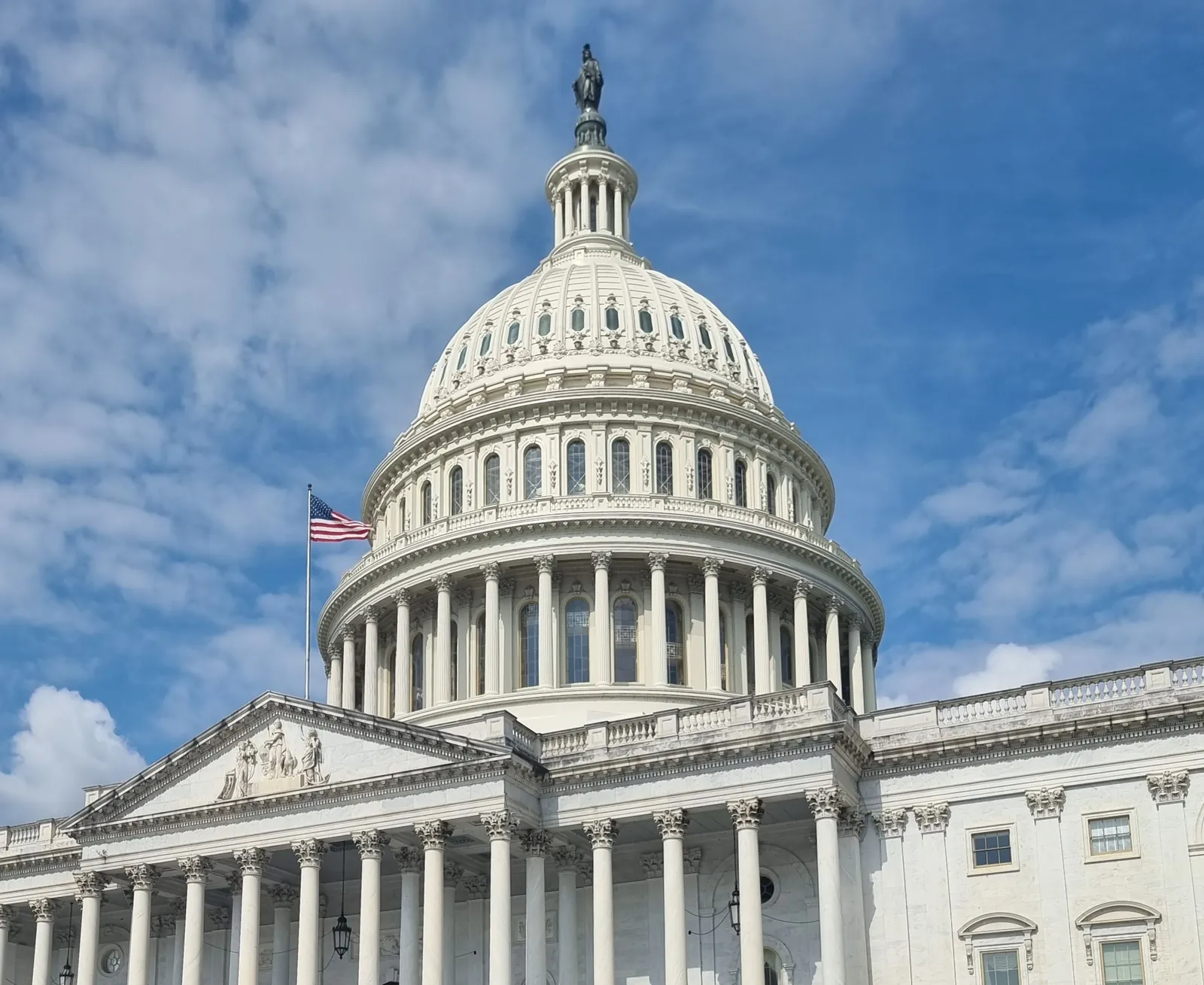
New York taught me scale. I spent the first fifteen years of my career there running global budgets, eleven markets for eBay, worldwide programs across 56 countries. Washington taught me the opposite lesson, and it might be the more valuable one: how to spend serious money reaching an audience smaller than a stadium crowd. I ran the digital practice at a DC public affairs firm for almost five years, building it past $50 million in annual client spend, and nearly every dollar of it chased some version of the same few thousand people. Staffers, committee members, regulators, the trade press that briefs them, and the concentric rings of people those people trust.
The first thing outsiders get wrong about Washington is treating it as an earned-media town where advertising is garnish. The press release still matters, but the attention economy around policy runs on a paid infrastructure that is unusually legible once you look at it. The morning newsletters, Politico Playbook, Axios, the specialist tiers like Stat for health policy, are the closest thing American advertising has to a guaranteed audience of decision makers reading at a known hour. Sponsorships there are expensive per impression and absurdly cheap per person who actually matters; run the math honestly and a Playbook sponsorship reaching a few hundred thousand readers, of whom tens of thousands sit inside the policy apparatus, costs less per relevant reader than almost any buy in commercial advertising, where reaching one verified in-market buyer among millions is the whole expensive game. This is the right-room principle at its purest: the room is tiny, and the entire craft is refusing to pay for anyone outside it.
The second thing outsiders get wrong is the theory of influence itself. A policy campaign rarely persuades a member of Congress directly; members are the most heavily defended attention targets in America. What paid media actually does is shape the information environment the member's decision runs through: the staffer who writes the memo, the trade reporter whose piece gets clipped into the morning briefing, the association executive whose call gets returned, the constituent employers back in the district. You are not buying a mind. You are buying the ambient weather around a decision, from six directions at once, timed to the week the decision is live. Once you hold that model, every line of the media plan has a job it can be graded on.
How the targeting actually works
Geography does more work in DC than anywhere else I have bought. A few zip codes, a handful of office buildings, the Acela corridor, the airports and Metro stations policy people move through. Digital out-of-home in those corridors, layered with geofenced mobile and CTV into the same footprint, builds frequency against the town without buying the country. Add the professional layer, LinkedIn by employer and committee-relevant job titles, the trades by beat, and you have a plan that a Hill staffer will encounter four times before lunch while a national campaign would have missed them entirely. And when the fight is legislative, the district layer completes it: the member's home media market, where the employers and constituents live, because pressure that arrives only in Washington reads as lobbying while pressure that arrives from home reads as politics.
Timing is the other half. Policy attention is calendared: markups, hearings, comment deadlines, appropriations season. A flight that runs steadily through August at national-brand pacing is money on fire; the same budget compressed around the three weeks a bill is actually moving changes what a member's office hears from every direction at once. It is the same correction cadence every media plan needs, with a legislative clock attached, and the clock is public, published, and ignored by every advocacy plan that spreads its budget evenly across a session because the retainer was monthly.
Measurement without a purchase event
And measurement has to grow up, because nobody converts. There is no purchase event when a coalition moves a vote, and the absence of one is not permission to measure nothing; it is a requirement to define the evidence in advance. What you can measure honestly: penetration of the named audience, branded search and direct traffic from the target geography, newsletter engagement, meeting requests granted, the language of your campaign showing up in floor statements, committee questions, and coverage. That last one is the tell I trust most, because language transfer is the closest thing advocacy has to attribution: when a phrase your campaign coined appears in a member's question at a hearing, something in the information environment moved, and you built the something. Soft signals, rigorously collected against a pre-registered definition of success, beat hard metrics that measure the wrong country.
Washington rewards exactly the discipline most advertising punishes: small reach, obsessive relevance, patience with proof. It is the best training ground in America for the question every marketer should be asking anyway. Not how many people saw this, but whether the right forty did.